

Scent is one of the most invisible yet most powerful architects of atmosphere. It shapes perception before thought even has time to form, it enters memory without permission, and it lingers long after the moment has passed. Neuroscience confirms what intuition has always known: smell is the only sense directly connected to the limbic system, the emotional centre of the brain responsible for memory, mood, and instinctive response.
This is why a single trace of lavender can soften inner tension, why citrus aromas seem to lift mental fog, and why warm notes of vanilla can create a quiet sense of safety, almost like returning to something familiar and tender. These responses are not symbolic language or marketing invention. They are biological reality, written into the nervous system.
During summer, however, fragrance becomes more delicate, more demanding, and infinitely more refined. Heat changes everything. It amplifies scent, intensifies projection, and can easily turn what is meant to feel elegant into something overwhelming. Heavy winter compositions become oppressive, synthetic air fresheners lose any sense of subtlety, and enclosed spaces begin to feel saturated rather than refreshed. What summer truly asks for is clarity. A sense of air, lightness, transparency, almost like a breeze passing through open linen curtains in the early morning. A fragrance that does not dominate the space but rather accompanies it, like a quiet layer of atmosphere rather than an obvious presence. The most interesting part is that this kind of sensory elegance cannot be achieved through synthetic shortcuts. It requires natural composition, intention, and an understanding of how scent behaves in living space.
Why synthetic air fresheners do not create true freshness
At first encounter, synthetic air fresheners can give an impression of cleanliness. They are immediate, sharp, and easily recognizable. Yet this effect is deceptive. Rather than cleansing the air, most of them simply cover existing odours with artificial aromatic molecules that do not interact with the environment in a meaningful way.
Many of these formulations contain volatile organic compounds, which are used to stabilise and extend fragrance projection. In enclosed interiors, especially when used regularly, these compounds may contribute to irritation of the respiratory system and create an environment that feels artificially perfumed rather than naturally breathable.
The Environmental Protection Agency in the United States has identified several categories of synthetic fragrance compounds as contributors to indoor air pollution. This alone changes the perception of what is often marketed as simple freshness. Beyond the question of safety, there is also the question of aesthetics. Synthetic fragrance is static. It does not evolve. It does not open, soften, or transform over time. It remains exactly the same from the first moment to the last.
Natural fragrance behaves differently. It is alive in a sensory sense. It shifts with temperature, reacts to airflow, and reveals different layers throughout the day. It can feel bright in the morning, softer in the afternoon, and almost intimate in the evening. This dynamic quality is what creates emotional depth within a space.
The natural summer fragrance families
Summer fragrance is best understood not as intensity but as clarity. Certain natural scent families embody this idea with exceptional precision. Citrus notes such as lemon, grapefruit, bergamot, and yuzu carry an immediate sense of brightness. They are crisp, luminous, and mentally awakening. These aromas are often associated with improved focus and reduced fatigue, which makes them especially suitable for workspaces, kitchens, and any area where mental clarity is desired.
Mint and eucalyptus introduce a different kind of freshness. It is not only aromatic but almost tactile, as if the air itself has become cooler. Mint supports concentration and mental alertness, while eucalyptus contributes a sense of purified space, often associated with open air and natural environments. Lavender remains one of the most studied botanical aromas in relation to the nervous system. It is associated with reduced anxiety, improved sleep quality, and overall emotional regulation. In summer interiors, it feels particularly appropriate for bedrooms and bathrooms, where calmness is more important than stimulation.
Green and marine inspired notes such as basil, green tea, cucumber, and sea salt create a modern sense of cleanliness. These fragrances are less floral and more architectural in character. They suggest order, space, and air circulation rather than decorative sweetness. Summer florals such as jasmine, neroli, rose, and peony bring a softer emotional dimension. They are more romantic, more atmospheric, and slightly more expressive. In evening light, these fragrances become particularly beautiful, especially in living rooms and personal relaxation spaces.
How to introduce natural fragrance into the home
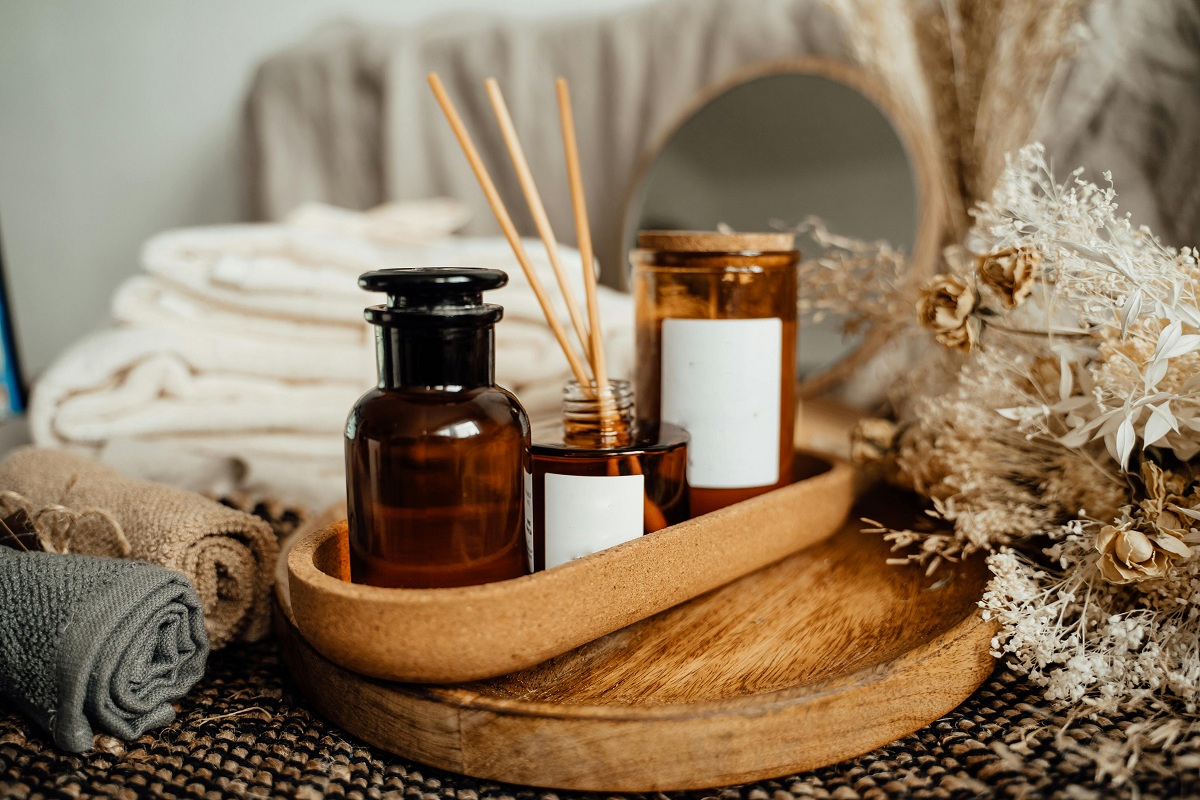
The way fragrance is delivered into a space is as important as the fragrance itself. The medium determines not only intensity but also perception. Natural wax candles made from soy or coconut wax provide one of the most refined methods of scent diffusion. When combined with essential oils, they release aroma gradually, without overwhelming the senses. A cotton or wooden wick ensures a cleaner burn, which supports both air quality and aesthetic experience. In summer, lighter compositions are preferable, while heavier woody or resin-based notes feel more appropriate for colder seasons.
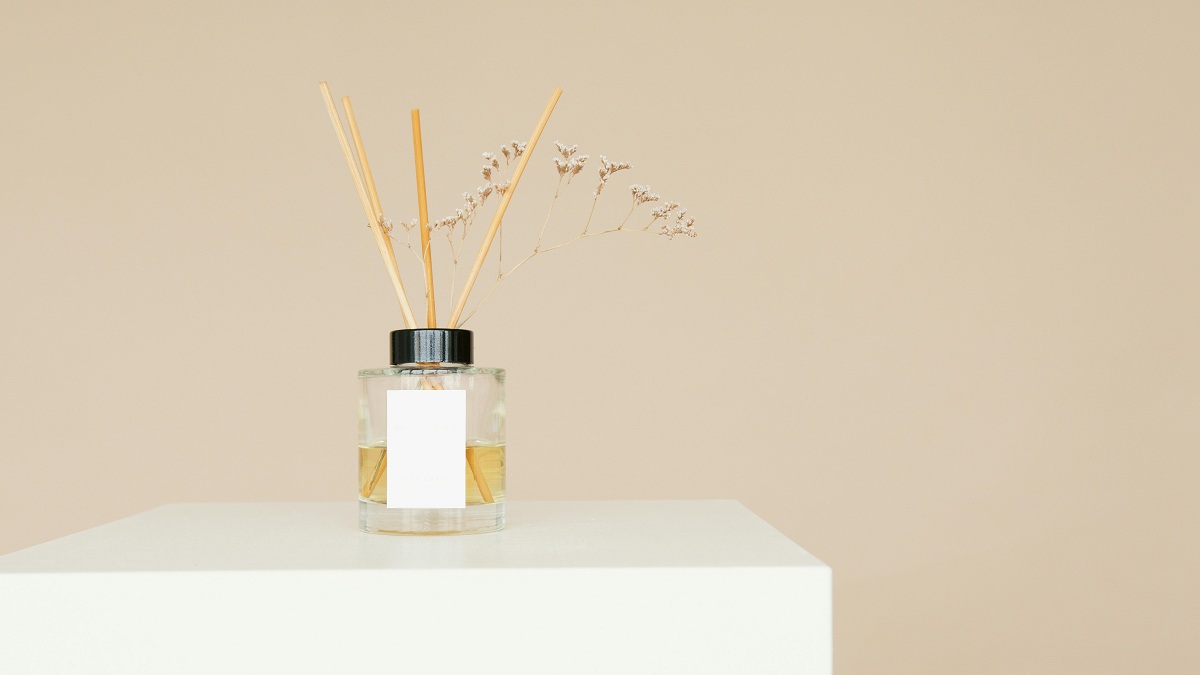
Reed diffusers offer a continuous and effortless presence of scent. They are particularly suitable for spaces where a subtle background fragrance is desired without active attention. In warmer temperatures, diffusion naturally increases, which means fewer reeds or less frequent refilling is often sufficient to maintain balance.
Ultrasonic humidifiers with essential oils introduce a dual effect. They gently humidify the air, which becomes especially relevant in air-conditioned environments, while simultaneously dispersing fragrance. Only a few drops of essential oil are enough to transform the atmosphere into something soft, diffused, and naturally aromatic. Fresh flowers and living plants remain the most organic form of home fragrance. A vase of jasmine, a small arrangement of lavender, or even a simple pot of mint placed near a window can subtly perfume a room in a way no artificial product can replicate. In addition to scent, they introduce visual softness and a sense of living presence.
Herb sachets offer a more intimate approach. Small fabric pouches filled with lavender, rosemary, or dried citrus peel can be placed in wardrobes, drawers, or entryways. Their fragrance is discreet yet continuous, creating a feeling of quiet order and care within personal spaces.
Creating a personal summer home fragrance
One of the most elegant ways to personalise home fragrance is through simple aromatic blends prepared at home. A basic approach involves combining water with essential oils in a small spray bottle of approximately 100 to 200 ml. Around 15 to 20 drops of essential oil are usually sufficient, depending on desired intensity. The mixture should be gently shaken before each use and can be lightly sprayed onto textiles such as curtains, cushions, or bed linens.
Summer blends can be composed with different emotional intentions. For a fresh maritime atmosphere, eucalyptus, mint, and bergamot create a sensation of open air and coastal clarity. The result is crisp, clean, and expansive. For a more Provençal inspired mood, lavender, rosemary, and lemon form a composition that feels both herbal and sunlit, reminiscent of warm countryside air and slow summer afternoons. For a tropical impression, grapefruit or yuzu combined with ylang ylang and a subtle coconut note creates a warmer, more sensual freshness, evoking distant climates and soft evening heat. For green clarity, basil, green tea, and cucumber create a composition that feels almost transparent. It is understated, modern, and deeply refreshing in its simplicity.
The essential principle in summer fragrance composition is restraint. Heat amplifies scent naturally, which means that what feels subtle indoors during cooler months can become unexpectedly intense in summer conditions. The most refined approach is always to use less than instinct suggests, allowing space and air to complete the composition rather than overwhelming it.
In the end, home fragrance is not about filling a room with scent. It is about shaping atmosphere with intelligence and sensitivity. In summer, when light becomes longer, air becomes warmer, and life moves with a slower rhythm, fragrance should follow the same philosophy. Lightness, transparency, and natural elegance become the true definition of luxury within the home.
Sources:
- Herz, R.S. (2009). International Journal of Neuroscience.
- EPA — Indoor Air Quality — epa.gov/indoor-air-quality-iaq


