


After the age of 35, skin enters a new biological chapter, one that is not defined by loss, but by transformation. This is the moment when the face begins to speak more clearly about internal processes that have been evolving quietly for years. Collagen production slows down, cellular renewal loses its earlier speed, hydration mechanisms become more delicate, and the cumulative effect of sun exposure begins to surface in visible form. Dermatology does not describe this phase as decline in a simplistic sense. It describes it as a shift in priorities. The skin becomes more demanding in structure, more precise in its needs, and significantly more responsive to consistency than to experimentation. The beauty industry often responds with noise. Science responds with clarity. And the difference between the two becomes essential after 35. This guide brings together what is actually supported by clinical research, what is exaggerated by marketing, and how to construct a routine that feels refined, intentional, and genuinely effective.
What Happens to Skin After 35, The Biological Reality
Cell renewal begins to slow in a way that is measurable and predictable. In earlier years, the skin renews itself within approximately three to four weeks. After 35, this rhythm extends, and the surface begins to reflect that change. The complexion may appear less luminous, texture becomes slightly uneven, and the natural freshness that once required minimal effort begins to need support. Collagen production follows a gradual downward curve. Scientific reviews in dermatological research indicate a steady yearly decrease beginning in early adulthood. By the mid-thirties, this becomes visible in the form of reduced firmness, softer facial contours, and the early formation of deeper lines. This is not sudden, but cumulative. Hydration balance also changes. Sebum production becomes more restrained, and the skin barrier loses some of its efficiency in retaining moisture. This is why skin that was once balanced or oily may begin to feel dry or combination in new ways. It is not the skin changing character, it is the skin changing structure. Hormonal evolution plays a quiet but important role. Oestrogen influences hydration, elasticity, and collagen integrity. As levels gradually shift, the skin responds with subtle changes in density and resilience. Finally, there is accumulated photo damage. Dermatological research consistently shows that the majority of visible ageing is linked to ultraviolet exposure over time. By 35, this accumulation becomes readable on the surface as pigmentation irregularities, fine vascular changes, and uneven tone.

Evidence based ingredients that actually work
Retinol and retinoids, the most researched active
Retinol remains one of the most clinically validated ingredients in dermatology. It belongs to the vitamin A family and works at a cellular level, influencing how skin cells behave and renew themselves. Research published in dermatological journals confirms that retinoids improve texture, reduce visible wrinkles, and stimulate collagen synthesis over time. They also support more even pigmentation and refined pore appearance. In practice, retinol is introduced gradually. A low concentration, applied a few evenings per week, allows the skin to adapt. This adaptation phase is important and may include temporary dryness or mild sensitivity. With consistency, the skin becomes more responsive, smoother, and more structured. Stronger prescription forms such as tretinoin are used under medical supervision and provide faster results, particularly in cases of pronounced photo damage.
Vitamin C, the intelligent antioxidant
Vitamin C in its active form supports collagen synthesis and protects the skin from oxidative stress caused by environmental exposure. It is one of the most studied antioxidants in dermatological science. Its role is not only corrective, but preventive. When applied in the morning, it helps neutralise free radicals and enhances the effect of sunscreen. Formulation matters. Stabilised vitamin C works best in concentrations between ten and twenty percent, stored in protective packaging that limits exposure to air and light.
SPF, the foundation of long term skin health
If there is one non-negotiable element in skincare after 35, it is daily sun protection. Sunscreen is not simply a protective layer, it is a preventive system that slows down the progression of visible ageing. Clinical studies confirm that consistent use of SPF significantly reduces the development of wrinkles, pigmentation, and loss of elasticity, even when introduced later in life. SPF should be applied generously and reapplied when necessary. It functions as the final and most important step in any morning routine.
Peptides, the supportive signal system
Peptides are short chains of amino acids that act as communication signals for the skin. They encourage processes associated with repair and structural support. While not as extensively studied as retinoids, they are well tolerated and often included in modern formulations designed for firmness and hydration support.
Niacinamide, the stabilising ingredient
Niacinamide is one of the most versatile ingredients in modern dermatology. It supports barrier function, reduces redness, improves uneven tone, and helps regulate sebum activity. It is suitable for nearly all skin types and works well alongside other actives without causing irritation.
Hyaluronic acid, the hydration magnet
Hyaluronic acid binds water to the skin and improves the appearance of plumpness and smoothness. It does not change structure, but it transforms how skin reflects light and retains moisture. It is most effective when applied to slightly damp skin and sealed with a moisturiser.
İngredients that are often overestimated
Collagen in topical creams does not penetrate deeply enough to rebuild structural collagen in the skin. Its primary function is surface hydration. Plant stem cell formulations remain largely unsupported by strong clinical evidence in human skin application. High price does not automatically indicate high efficacy. In skincare, formulation quality and ingredient concentration are significantly more important than branding or packaging.
Morning Routine After 35
A refined morning routine does not require complexity. It requires precision and consistency. Begin with a gentle cleanser that respects the skin barrier. Follow with vitamin C serum to support antioxidant protection and radiance. Apply a moisturiser that maintains hydration balance throughout the day. Finish with sunscreen, applied generously and evenly across all exposed areas of skin. This sequence takes only a few minutes but forms the foundation of long term skin health.
Evening Routine After 35
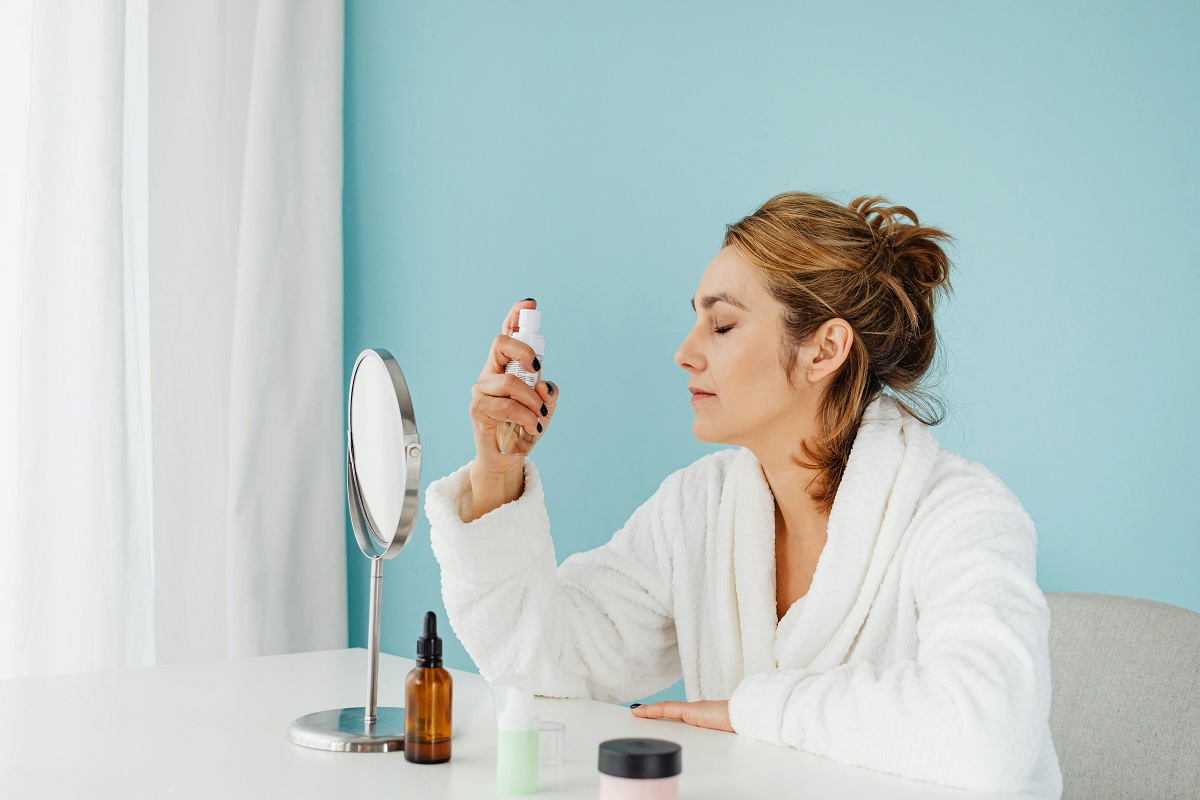
Evening care is the moment of restoration. The skin is first cleansed thoroughly, especially if sunscreen or makeup has been used. A double cleansing method can be beneficial, starting with an oil or micellar phase followed by a water-based cleanser. Retinol is introduced on selected evenings, allowing the skin time to adapt. On alternate evenings, peptide based or restorative serums can be used. A richer moisturiser completes the routine, supporting overnight recovery.
Factors that influence skin more than cosmetics
Sleep quality has a direct relationship with skin regeneration. Insufficient rest affects barrier function and accelerates visible fatigue. Stress influences hormonal balance, and elevated cortisol levels can affect collagen stability and inflammation patterns in the skin. Nutrition plays a structural role. Proteins, antioxidants, and healthy fats contribute to skin resilience from within. Hydration supports elasticity and overall appearance, influencing how light reflects on the skin surface.
Skincare after 35 is not about reversing time. It is about understanding biology and responding with intelligence rather than excess. A minimal but scientifically grounded routine can be surprisingly powerful. Vitamin C in the morning, retinol in the evening, daily SPF, and consistent moisturisation form a framework that is both simple and effective. Everything else is refinement, not necessity.
Sources
- Mukherjee, S. et al. (2006). Retinoids in the treatment of skin aging — Clinical Interventions in Aging // doi.org
- Al-Niaimi, F., & Chiang, N. (2017). Topical vitamin C and the skin // ncbi.nlm.nih.gov
- Hughes, M. C. et al. (2013). Sunscreen and prevention of skin aging — Annals of Internal Medicine // doi.org
- American Academy of Dermatology // aad.org
- Ganceviciene, R. et al. (2012). Skin anti-ageing strategies — Dermato-Endocrinology // doi.org
- Harvard Health Publishing — Retinoids and wrinkles // health.harvard.edu